The Living Book and the Quiet Guide
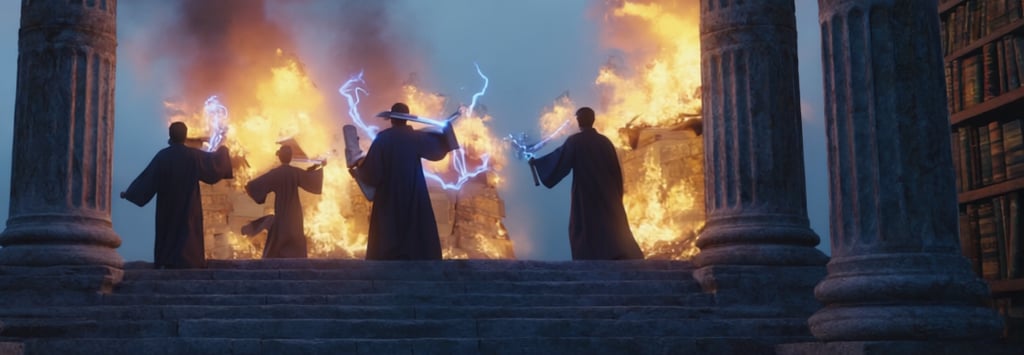
Inspired by The Book of Truth: "This is the book that no earthly power could take, though they burned the libraries of Alexandria and scattered the wise to the winds. It was not lost in the destruction of the Temple, for it was never contained in buildings made with hands (Acts 7:48). "
Alan Dyer
9/4/20257 min read
The Living Book and the Quiet Guide: A Reflection from the Gospel of Truth
Inspired by The Gospel of Truth: "He is the one who set the All in order and in whom the All existed and whom the All lacked. As one of whom some have no knowledge, he desires that they know him and that they love him. For what is it that the All lacked, if not the knowledge of the Father? He became a guide, quiet and in leisure. In the middle of a school he came and spoke the Word, as a teacher."
The Word Spoken in Leisure
This is the teaching of the Word spoken in leisure. Not shouted from mountaintops like Moses receiving the commandments (Exodus 19:16-20), not carved in tablets of stone, but whispered in the middle of a school where the scribes and Pharisees gathered, where the wise were tested by a carpenter's son and the children remembered what the learned had forgotten.
He came not as a conqueror riding on a warhorse, but as a guide riding on a donkey, meek and lowly in heart (Matthew 21:5). He walked among those who thought they possessed knowledge, the ones who sat in Moses' seat (Matthew 23:2), and revealed their profound emptiness. Like the woman at the well who came seeking water but found the source of living water (John 4:7-26), those who encountered him discovered their deepest thirst.
He did not argue with the doctors of the law, he unveiled truth. He did not condemn the woman caught in adultery, he clarified mercy (John 8:1-11). His method was the method of the Father: patient, gentle, drawing all things to himself not by force but by love (John 12:32).
As Isaiah prophesied: "He shall not cry, nor lift up, nor cause his voice to be heard in the street. A bruised reed shall he not break, and the smoking flax shall he not quench" (Isaiah 42:2-3). This is the nature of the quiet guide who teaches not by overwhelming but by awakening what was always present within.
On the Children of Knowing
The children came not with credentials from the schools of Jerusalem, but with the memory that wise men lose in their learning. They did not recite the 613 commandments, they recognized the face of love. As Jesus said, "I thank thee, O Father, Lord of heaven and earth, because thou hast hid these things from the wise and prudent, and hast revealed them unto babes" (Matthew 11:25).
These children, not merely young in years but young in heart, approached with the trust that the Kingdom requires (Matthew 18:3). When they grew strong in faith, they were taught not the rules and regulations that the Pharisees multiplied, but the aspects of the Father's face: mercy, compassion, long-suffering, abundant in goodness and truth (Exodus 34:6).
This teaching came not as image carved by human hands, forbidden by the second commandment (Exodus 20:4), but as intimacy, the knowledge that comes from abiding in the vine (John 15:4), from dwelling in love and having love dwell within.
They were glorified with the glory that Jesus had with the Father before the world was (John 17:5), and they gave glory in return. Not to a throne made of gold and precious stones, but to a presence that fills all things (Ephesians 4:10). Not to a name that must be spoken with trembling, but to a knowing that surpasses understanding (Philippians 4:7).
In their hearts, the Living Book was made manifest, not the scrolls of the Law kept in the ark, not the phylacteries bound upon their foreheads (Deuteronomy 6:8), but the word written upon the tablets of their hearts (2 Corinthians 3:3). This book existed in the thought and mind of the Father before the foundation of the world, before the first "Let there be light" was spoken into the void (Genesis 1:3).
On the Book That Waited
This is the book that no earthly power could take, though they burned the libraries of Alexandria and scattered the wise to the winds. It was not lost in the destruction of the Temple, for it was never contained in buildings made with hands (Acts 7:48). It was not hidden in caves like the scrolls at Qumran, it was waiting in the secret place of the Most High (Psalm 91:1).
This Living Book was written before time began, as the apostle Paul understood: "According as he hath chosen us in him before the foundation of the world" (Ephesians 1:4). It is the book of life mentioned in Revelation (Revelation 20:12), but also the book of remembrance spoken of by Malachi: "A book of remembrance was written before him for them that feared the Lord, and that thought upon his name" (Malachi 3:16).
And he who took this book was slain, not as a victim crushed by the powers of darkness, but as a revealer opening what had been sealed. Not as a sacrifice appeasing divine wrath, but as a seed falling into the ground to die so that it might bring forth much fruit (John 12:24). Like the grain of wheat that seems to perish but emerges as the harvest, his death was the opening of the testament, the unsealing of the will.
The inheritance he left was not gold or silver that perishes (1 Peter 1:18), but gnosis, the knowledge of God that is eternal life (John 17:3). The treasure of this house was not wealth stored up where moth and rust corrupt (Matthew 6:19), but remembrance, the pearl of great price for which the wise merchant sells all that he has (Matthew 13:46).
As it is written in Daniel's vision: "And they that be wise shall shine as the brightness of the firmament; and they that turn many to righteousness as the stars for ever and ever" (Daniel 12:3). This brightness is the gnosis that illuminates all who receive it.
On the Father of the All
The Father was invisible, not because he was absent from his creation like the distant gods of philosophy, but because he was incomprehensible to minds clouded by the knowledge of good and evil (Genesis 3:5). As Paul wrote to Timothy: he "dwelleth in the light which no man can approach unto; whom no man hath seen, nor can see" (1 Timothy 6:16).
Yet this same invisible Father made himself known through the Son, for "no man hath seen God at any time; the only begotten Son, which is in the bosom of the Father, he hath declared him" (John 1:18). The word "declared" here means "exegeted", the Son became the living interpretation, the walking commentary on the Father's nature.
He retained the perfection, not to hoard it like the rich man who built bigger barns (Luke 12:18), but to offer it as a path. This is the narrow way that leads to life (Matthew 7:14), narrow not because it excludes but because it requires the singleness of heart that sees God (Matthew 5:8).
Every space in creation has its source in him, for "in him we live, and move, and have our being" (Acts 17:28). Every seeker walks toward that source, not by climbing Jacob's ladder rung by rung, but by remembering that heaven and earth meet wherever the heart opens to receive the Kingdom that is already within (Luke 17:21).
The Father's desire is not worship extracted by fear, but recognition arising from love. As the beloved disciple wrote: "We love him, because he first loved us" (1 John 4:19). This is the great secret: the seeking heart discovers it was always the sought-after heart, the prodigal realizes the Father was always running toward him (Luke 15:20).
On the Orchard of the Living Book
Let your orchard become a living school where every element speaks the word of truth. Let each tree be a letter in the Father's alphabet, the apple tree spelling abundance, the olive tree writing peace, the fig tree inscribing patience and the promise of season's return (Matthew 24:32).
Let the pond be a page reflecting heaven's text, its surface a mirror for the Word made flesh. Let the wind be the Spirit breathing where it lists (John 3:8), carrying the seeds of truth to hearts prepared to receive them. As Isaiah proclaimed: "So shall my word be that goeth forth out of my mouth: it shall not return unto me void, but it shall accomplish that which I please" (Isaiah 55:11).
Plant cherry trees as verses in the song of creation, each blossom a note in the hymn that all nature sings to its Creator (Psalm 19:1). Place stones as punctuation in earth's great poem, each one a word of witness like the stones Joshua set up saying, "These stones shall be a witness unto us; for they have heard all the words of the Lord" (Joshua 24:27).
Let turtles bask on logs as scribes of divine leisure, embodying the unhurried pace of eternal love. They teach what Martha needed to learn from Mary: that the good part is simply to sit at the Master's feet and hear his word (Luke 10:39).
Create pathways like the straight paths the voice in the wilderness called for (Isaiah 40:3), but let them curve and meander, teaching that the journey itself is the destination. Place benches for rest and contemplation, remembering that the Lord is shepherd and makes his flock to lie down in green pastures (Psalm 23:2).
And when the children come, those who have not lost the capacity for wonder, who do not demand signs and wonders but feel truth resonating in their bones like David feeling the Spirit of the Lord (1 Samuel 16:13), teach them not with answers that close off mystery, but with presence that opens infinite possibility.
Remember the question Jesus posed: "But whom say ye that I am?" (Matthew 16:15). This is not a question answered by reciting creeds, but by recognition arising from the depths of being. It is the question that each tree asks of those who sit in its shade, that each flower asks of those who catch its fragrance.
For the Living Book is not taught like the scribes teaching the traditions of the elders (Matthew 15:2). It is revealed like the transfiguration on the mountain (Matthew 17:2), sudden and transformative. It is remembered like the disciples on the road to Emmaus suddenly recognizing the stranger (Luke 24:31). It is read in the silence that follows the still, small voice (1 Kings 19:12), and spoken in the joy that wells up from the fountains of salvation (Isaiah 12:3).
In this orchard-school, the curriculum is wonder, the textbook is creation itself, and the teacher is the Spirit of Truth who guides into all truth (John 16:13). Here, the Living Book opens its pages to any heart humble enough to receive its endless revelation.
sdbest5@gmail.com
© SDBEST LLC, 2025. All rights reserved.